Plate 01 — Driveway paving
Asphalt driveways, built from the ground up.
New drives, full replacements, and resurfacing where the base underneath is still worth keeping. Built to the same specification we run on parking lots and private roads — the depths change, the standard does not.
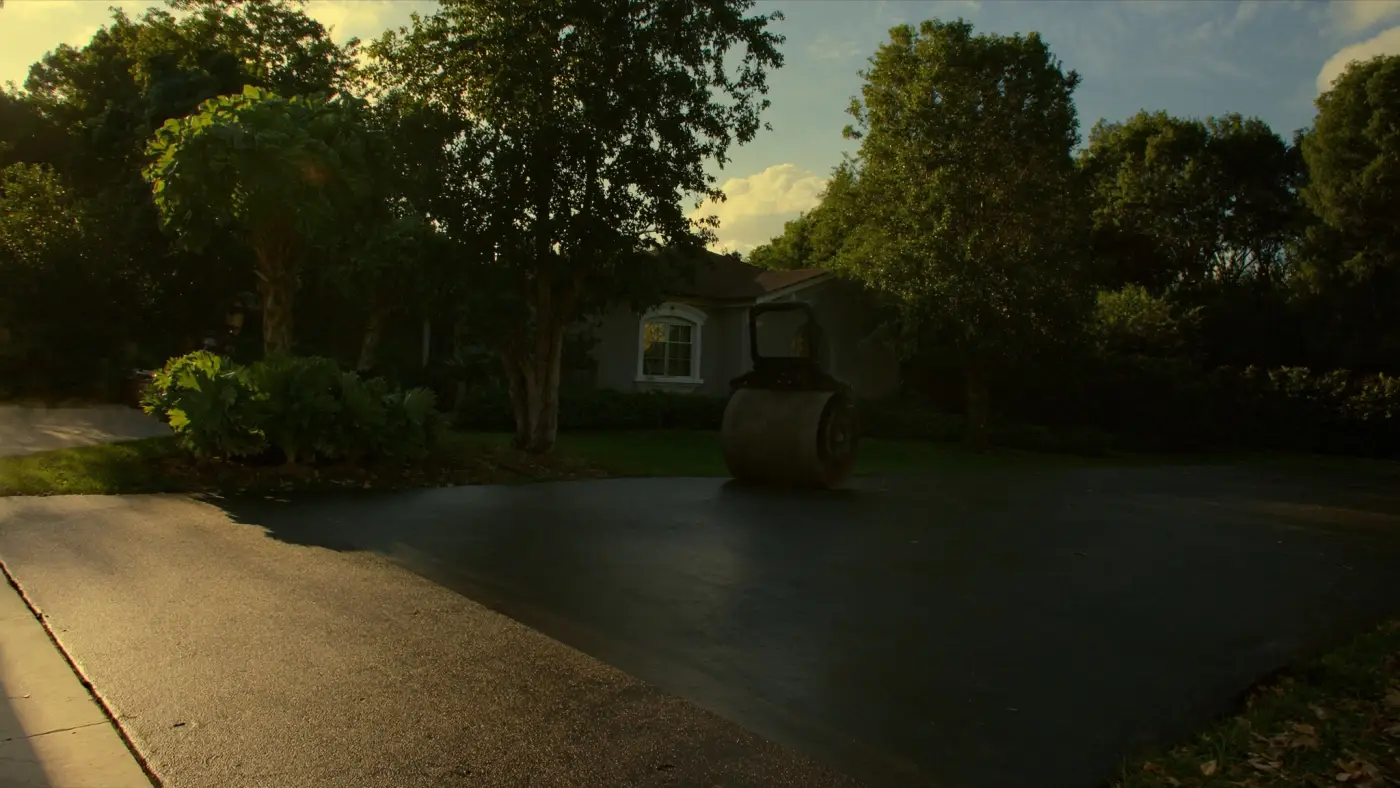
The short version
The asphalt is the easy part.
Laying hot mix is a few hours of work and it is the part everyone photographs. What decides whether your driveway is still flat in fifteen years is the two days before that, when nothing looks like progress: the old surface coming out, the ground being cut to depth, stone going in and getting compacted.
That matters more in Tampa than it does in most of the country. The ground here is sand over a water table that sits high through much of Hillsborough County. Sand that has been properly compacted and kept dry carries load fine. Sand that was rushed, or worked while it was wet, moves — and when it moves the asphalt on top has nothing to bridge and it sinks and cracks in exactly the pattern people mistake for cheap asphalt.
So we build a compacted crushed limerock base, normally eight inches under a residential drive, in lifts that each get compacted and proof-rolled. Then we check the grade so water leaves the driveway instead of standing on it. Then we pave.
Choosing the work
Replace it, or resurface it?
This is the first real decision and it is worth getting right, because resurfacing a failed base is money you will spend twice.
| Resurfacing (overlay) | Full replacement | |
|---|---|---|
| Right when | Surface is worn, faded or lightly cracked but sits flat and drains | Alligator cracking, potholes, sunken sections, or the base was never right |
| What happens | New asphalt bonded over the existing surface after prep and repairs | Everything comes out, subgrade recut, new compacted base, new asphalt |
| On site | Usually one to two days | Usually three to four days |
| Height change | Raises the drive, so aprons, garage thresholds and edges need checking | Finishes at the original level |
| Lasts | As long as the base under it does — no longer | Full service life, because the structure is new |
If someone quotes you an overlay without walking the drive and looking at how it cracks, they are quoting the easy job rather than the right one.
Surfaces
Asphalt, concrete or millings.
We lay asphalt. That is a bias worth stating plainly, so here is the honest comparison rather than a sales one — including where concrete is the better answer.
| Hot mix asphalt | Concrete | Asphalt millings | |
|---|---|---|---|
| Install time | Two to four days | Longer, plus a cure before you drive on it | One to two days |
| Ground movement | Flexes with a shifting subgrade | Rigid — moves and it cracks in slabs | Flexes, but the surface is loose-knit |
| Heat | Absorbs it — noticeably hot underfoot in July | Stays lighter and cooler | Absorbs it |
| Upkeep | Sealcoating on a cycle, crack filling as needed | Joint sealing, occasional cleaning | Topping up and regrading over time |
| Repairs | Patched and resurfaced without replacing everything | Slab replacement, and colour rarely matches | Simple — add and recompact |
| Suits | Most Tampa driveways | People who want light colour and the longest life | Long rural drives, overflow parking |
Concrete is a genuinely good driveway and it lasts longer than asphalt. It also costs more, takes longer, and cracks in ways that are harder to make disappear. If that is the direction you are leaning, get a concrete quote too — we would rather you were happy in ten years.
Not sure whether yours needs replacing or resurfacing?
Send a photo and rough dimensions. We will tell you which one it is before anyone comes out.
What moves a quote
Why two driveways the same size price differently.
Square footage is the starting point and rarely the deciding one. These are the things that actually change the number, and every one of them is visible on a site visit:
- Tear-out. Removing and hauling an old surface is labour and disposal. A bare or gravel drive skips it.
- What the base is doing. Sound base means less stone and less machine time. A base that has been pumping water and moving means rebuilding it.
- Access. A truck that can reach the pour is a very different day to one that cannot. Narrow side approaches, tight gates, low branches and soft verges all add time.
- Drainage. If water currently stands on the drive or runs toward the garage, fixing the grade is part of the work rather than an extra.
- The apron. Tying into the road edge pulls in a right-of-way permit and its review window.
- Shape. Curves, turning circles and parking spurs mean more hand work and edge cutting than a straight run.
The cost guide goes through each of these in more detail, including which ones you can change and which you cannot.
The weather window
One more thing worth knowing before you book a date. From June through September Tampa gets afternoon storms most days, and that changes how paving is scheduled rather than whether it happens.
Rain landing on a fresh mat before it has cooled and been rolled will damage the surface. Worse, rain on an open subgrade turns compacted ground back into something that will not carry load, which means waiting for it to dry out and re-compacting before any asphalt goes down. Neither is recoverable by working faster.
So a summer quote comes with a weather window attached, and occasionally a moved date. We would rather tell you that upfront than lay over wet ground to protect a calendar — that decision shows up in your driveway about four years later.
Straight answers
Driveway paving questions.
How long does it take to pave a driveway?
A standard residential driveway is a two to four day job. Tear-out and grading is day one, base and compaction day two, paving day three. Most of that is groundwork — the asphalt itself goes down in a few hours.
When can I drive on it?
Walk on it the same evening, park on it the next day. Avoid turning your wheels while stationary for the first couple of weeks and keep trailer jacks and kickstands off it until it has fully cured, which takes longer in summer heat.
Can you pave over my existing driveway?
Sometimes. If the base underneath is still solid and the surface is only worn or lightly cracked, an overlay works and saves the tear-out. If the cracking is structural — alligator patterns, sunken sections, potholes — an overlay just copies the failure upward. We tell you which one you have.
Do you use asphalt millings?
For long rural drives and overflow parking, yes. Millings are recycled asphalt, compacted in place. They cost less and look rougher, and they will never be as smooth or as clean-edged as hot mix. For a front driveway most people want hot mix.
What about the apron at the road?
That part sits in the public right-of-way. If your job replaces it, the City of Tampa or Hillsborough County has to review it first, and that review runs about 12 to 15 business days. We flag it before you commit to a date.
Related
No obligation
Get the driveway measured.
Rough size and what is wrong with it now is enough to start. We come out to measure before any number is final.
Rather talk? (813) 285-7026, weekdays 7–6.